Case Study: Interview with TAFE NSW, ISSP Organizational Member

Recently, we interviewed Belinda Bean, MSc Sustainable Development, about how she teaches the next generation of sustainability practitioners.


Belinda is a faculty member at TAFE NSW, one of Australia's leading vocational education and training providers. She teaches students who are studying to earn their Higher Education Diploma of Sustainable Practice or Undergraduate Certificate in Sustainable Practice.

Their Diploma of Sustainable Practice (DoSP) won the prestigious Green Gown Award Australasia in the Next Generation Learning & Skills category.

Through your experience as an impact strategist, what sets the Diploma of Sustainable Practice at TAFE NSW apart from other similar programs?


The DoSP stands out for its hands-on, project-based approach, where students apply sustainability skills from day one, making real-world impacts through workplace or community projects. The course integrates key trends like mandatory disclosure and GenAI, ensuring students stay at the forefront of sustainability while receiving mentoring from industry experts.


How does the DoSP prepare students for the Sustainability Excellence Associate credential exam?


The DoSP aligns with ISSP standards and covers essential topics like sustainability strategy, performance analysis, and project implementation. Through real-world projects and a balance of theory and application, students gain the comprehensive knowledge needed to confidently sit for the SEA credential exam.


Why do you enjoy teaching sustainability at TAFE NSW?


I enjoy teaching sustainability at TAFE NSW because the impact is immediate — students apply their learning in real-world contexts, driving meaningful change. The collaborative environment and passionate students make teaching rewarding, knowing we’re all contributing to meaningful change.


What are some examples of how students or alumni have put their sustainability skills into action?


Students lead impactful projects whilst studying, like one that diverted 96 tonnes of car bumper bars from landfill and another that helped a paper mill reduce 646 tonnes of waste annually (and saving over $64,000). These projects showcase the practical skills our graduates bring to drive sustainability in various industries.


Student Spotlights

Two recent graduates from the Diploma of Sustainable Practice (DoSP) program were awarded TAFE NSW Student of the Year in 2020 and 2024. Given the number of courses delivered across all of TAFE NSW, this is significant. Sustainability students are making a name for themselves!
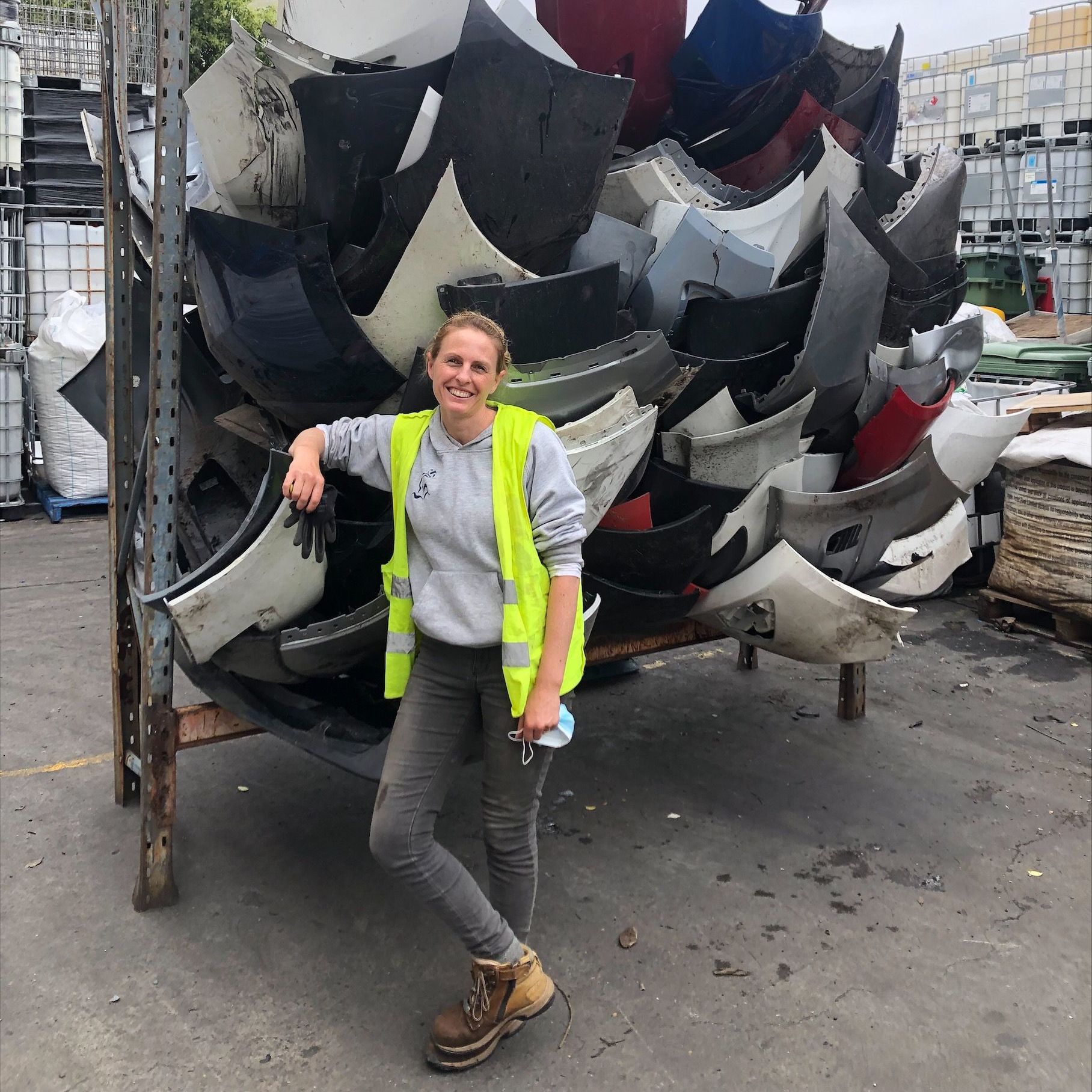
TAFE NSW helps Berowra charity queen build a more sustainable future

Rebecca Healy's long-held passion for sustainability prompted her unlikely career pivot in 2021 to launch a plastic recycling charity, Boxhead Plastics. The charity’s extraordinary success grew from recycling 1.2 tonnes of plastic waste in 2021 to recycling 96,000 tonnes less than three years later.
Read her story

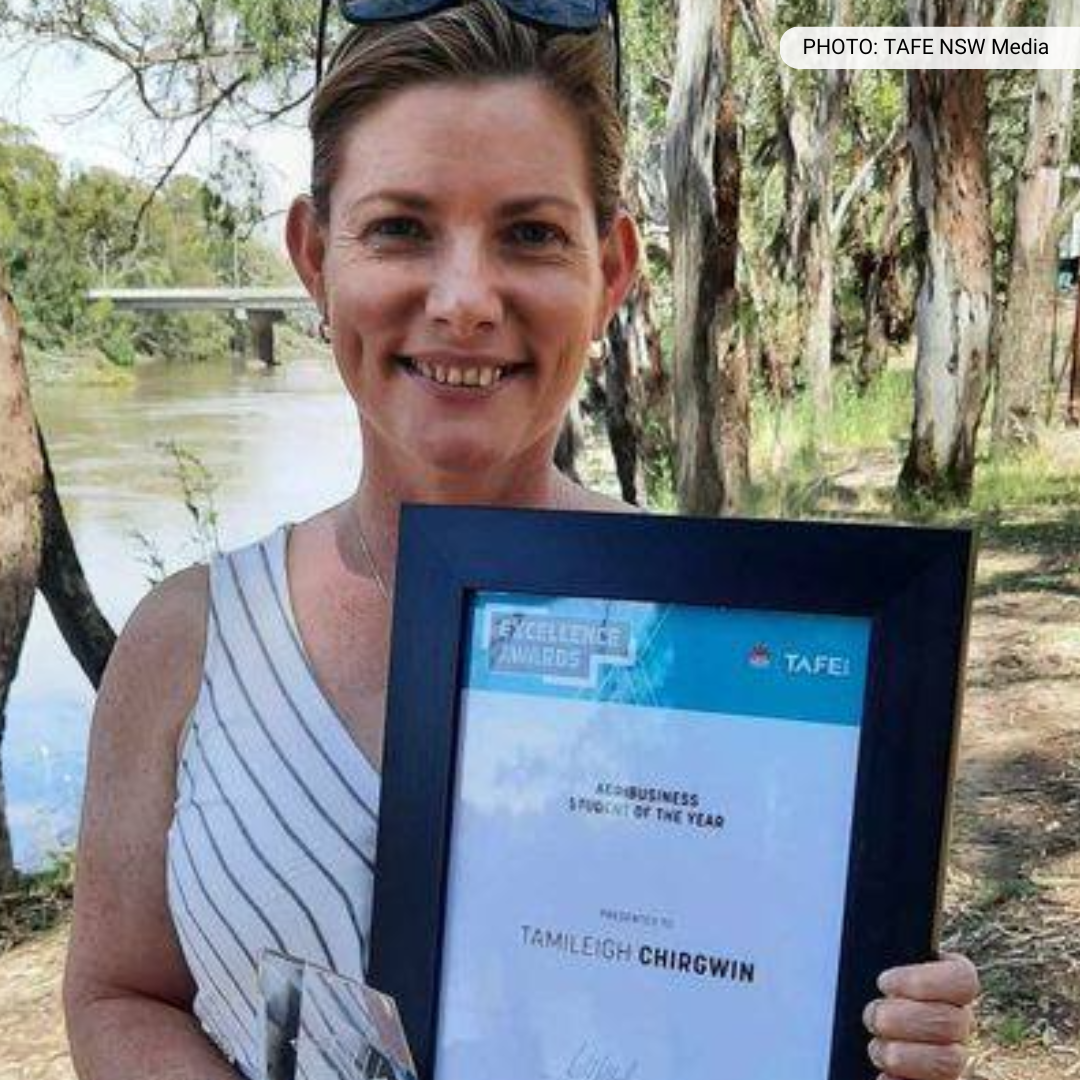
Housing leader credits TAFE NSW with helping her attract $380k in grant funding

Waddi Housing and Advancement Corporation coordinator Tamileigh Chirgwin said completing the Diploma of Sustainable Practice at TAFE NSW helped the Waddi Housing board to attract almost $400,000 worth of grant funding and transform how she approaches her role.

Read her story

Does your higher education institution provide a sustainability program?

Consider our organizational membership, which includes courses, credentialing, and networking for students.

Read perspectives from the ISSP blog
February 20, 2026
February 20, 2026 As someone who works closely with sustainability practitioners and leaders, I constantly hear the same themes: “How do I get leadership to say yes?” “How do small businesses realistically do this?” “How do we scale change without burning out?” That’s exactly why I’m so excited about our upcoming webinar and working sessions. These aren’t theoretical discussions. They’re practical, interactive, and designed for those of us doing the hard work of driving sustainability forward — often without formal authority, large budgets, or perfect systems. Here’s what’s coming up and why I believe these sessions matter right now! Webinar: The advantages and challenges for small businesses in sustainability March 5, 12:00pm EST REGISTER HERE We often center sustainability discussions on large corporations. ESG frameworks. Reporting mandates. Multi-billion-dollar net-zero commitments but small businesses make up the majority of our economy. In our upcoming webinar, The Advantages and Challenges for Small Businesses in Sustainability , Colleen Spear brings clarity and practicality to this often overlooked audience. As the founder of Spearpoint Strategies in New England, Colleen works directly with small businesses across industries — from bottle manufacturing to law to clothing design. She helps organizations embed sustainability into operations and strategy through certification support, fractional management, and strategic planning. This session will explore: The barriers small enterprises face in sustainable business spaces Why most sustainability advice overlooks small business realities The natural strengths small businesses possess How to apply sustainability practically within constrained environments Small businesses often lack the complexity — and bureaucracy — of larger corporations. That agility can be a major advantage. Decision-makers are accessible. Values can be integrated quickly. Cultural shifts can happen faster. Rather than positioning small businesses as behind, this session reframes them as powerful drivers of innovative, community-centered solutions. If you work with small enterprises, advise them, or operate one yourself, this webinar will provide actionable insights and language you can apply immediately. Webinar: Influencing Up: Strategies for Sustainability Leaders April 28, 5:00pm EST REGISTER HERE Our upcoming session with Dr. André Taylor, Strategies for ‘Influencing Up’ as a Sustainability Leaders , focuses on one of the most critical — and underdeveloped — skills in sustainability work: influencing without authority. Dr. Taylor brings a powerful combination of experience. He began his career as an environmental manager and scientist before earning a mid-career PhD in leadership at Monash University. Today, he serves as Leadership Specialist and Adjunct Associate Professor at the International WaterCentre and works extensively with sustainability and executive leaders. Why does this matter? Because sustainability practitioners rarely have direct authority over finance teams, executives, procurement departments, or policymakers. Yet we are expected to influence all of them. This session will explore: How to gain buy-in from senior leaders How to navigate functional silos How to influence across sectoral boundaries How to build authority when you don’t have the title What I appreciate most about this session is that it reframes influence as a skill — not a personality trait. We’ll dive into practical tools and concepts that help sustainability leaders: Speak the language of decision-makers Align initiatives with strategic priorities Understand motivations and incentives Work effectively across power dynamics If you’ve ever felt stuck waiting for approval, resources, or executive sponsorship, this webinar is designed for you. Implementing the AIMS Framework: From Momentum to Scale Four Interactive Working Sessions: March 18th (12pm EST) | Amplify REGISTER HERE April 22nd (12pm EST) | Influence REGISTER HERE May 12th (12pm EST) | Multiply REGISTER HERE June 25th (12pm EST) | Scale REGISTER HERE For those ready to go deeper, we’re offering a four-part interactive working series led by Dr. Jacqueline Kerr. Dr. Kerr has been published in Harvard Business Review and is in the top 1% of cited social scientists worldwide. Her work blends behavior change, implementation science, and systems thinking to help sustainability leaders deliver results — even in resource-constrained settings. These sessions aren’t passive webinars. They’re Miro-based, hands-on working sessions built around real initiatives participants are leading. Here’s how the journey unfolds: AMPLIFY — Recognizing Hidden Success We begin by mapping sustainability wins — even small ones — and identifying their ripple effects. Participants will: Surface hidden ROI Identify informal impact makers Recognize patterns across companies Publicly commit to amplifying a success story Key insight: change is already happening — it’s just often invisible. INFLUENCE — Removing Barriers Without Authority We diagnose stalled initiatives using an Action Audit framework. Together, we map barriers across: Strategy & Design People & Engagement Systems & Structures Feedback & Adaptation Participants will leave with: Clear barrier diagnoses Peer-tested influence strategies Commitment to remove one key blocker The big realization here? Most stalled initiatives are people challenges embedded within unsupportive systems. MULTIPLY — Creating Action Hubs We explore what makes groups succeed versus stall and design collaborative “action hubs” around shared problems. Participants will: Identify high-impact problems worth solving together Map who needs to be involved Develop invitation language Learn facilitation tactics that build ownership When groups co-design solutions, momentum becomes self-sustaining. SCALE — Building Systems That Spread Change Finally, we design pathways for scaling impact beyond individual teams. We’ll: Map where wins can spread Identify facilitator pipelines Explore how peer networks enable growth Commit to developing new leaders The insight here is transformative: when you train facilitators and activate system levers, change no longer depends on one sustainability champion pushing relentlessly. Why These Sessions Matter Now Across sectors, sustainability professionals are navigating political tension, budget constraints, competing priorities, and burnout. What excites me about this lineup of upcoming webinars and working sessions is that they address the real work: Influence without authority Practical sustainability in small enterprises Behavior change and implementation Scaling change through systems, not heroics These experiences are designed not just to inform — but to equip. Whether you're looking to sharpen your executive influence, support small business transformation, or move from isolated wins to systemic impact, there’s a session built for you. And perhaps most importantly, these sessions create community. You won’t just learn frameworks — you’ll see patterns across organizations, borrow strategies from peers, and build networks that last beyond a single meeting. If you’re serious about driving sustainable change in 2026, I invite you to join us. We’re not just talking about sustainability. We’re building the leadership capacity to deliver it.
By By Elizabeth Dinschel & Bangaly Kourouma January 16, 2026
January 16, 2026 At the International Society of Sustainability Professionals (ISSP), strategy is not theoretical. It is practical, action-oriented, and grounded in the real needs of sustainability professionals working in complex and rapidly evolving environments. The ISSP 2026 Strategic Plan is a one-year, execution-focused roadmap designed to strengthen ISSP’s role as a global professional association for sustainability practitioners. Built directly from member feedback gathered through Town Halls, surveys, and ongoing conversations, the plan focuses on three strategic priorities: financial stability, relevant professional knowledge, and meaningful member engagement. This article explains what the 2026 Strategic Plan is, why these priorities matter, and how member input directly shaped ISSP’s direction. What the ISSP 2026 Strategic Plan Is—and Is Not The 2026 Strategic Plan is not a long-term vision statement or a five-year forecast. It is a focused, one-year plan designed to deliver measurable progress. The plan is intended to: Strengthen ISSP’s financial sustainability Modernize sustainability education and credential resources Improve the member experience across career stages Each priority includes defined actions, timelines, and success metrics, ensuring accountability and transparency.
Paper cut-out figures holding hands in a chain against a dark blue background.
By Elizabeth Dinschel, December 18, 2025 December 18, 2025
Elizabeth Dinschel, MA, MBA, is the Executive Director of ISSP Earlier this month, we hosted our first global ISSP Town Hall since I stepped into the role of Executive Director. I logged off that call energized, humbled, and deeply grateful for the honesty, generosity, and care that our members brought into the space. This Town Hall was never meant to be a one-way update. It was designed as a listening session — a chance for ISSP leadership and staff to hear directly from sustainability professionals across regions, sectors, and career stages. And you delivered. What follows are a few reflections on what I heard, what we learned, and where we’re headed next together. Why We Called This Town Hall ISSP has gone through a period of transition — new leadership, new staff, and a renewed focus on modernizing how we serve a truly global membership. Change can be energizing, but it can also create moments of uncertainty and disconnection. We knew we needed to pause, gather our community, and listen with intention. The Town Hall brought together members from multiple continents, industries, and disciplines. Sustainability practitioners, consultants, engineers, communicators, policy professionals, and career-transitioners all showed up with thoughtful questions and candid feedback. One thing was immediately clear: this community cares deeply about its work, about each other, and about ISSP’s role in supporting sustainability professionals at a challenging moment for the field.
More blog posts