Kyle Ropski - SEA Case Story

Kyle Ropski is a Constituent Service Representative for the Office of Senator Nick Miller.

What brought you to this moment in your career where the Sustainability Excellence Associate (SEA) made sense for you?


The SEA made sense for me as I looked to gain more qualifying experience in the sustainability field following my graduation from Muhlenberg College in May of 2022. I majored in both economics and sustainability, but was eager to learn more in depth about the field to better position myself as a sustainability advocate. My previous experience with USGBC's LEED program led me to the ISSP as an avenue of further education to explore. I am particularly interested in the topics and solutions to some of our most challenging issues tied to the climate emergency such as water scarcity and urbanization. 


I appreciate the insights provided to me through the program, and I plan to pursue SEP in the coming years. 


How are you putting the knowledge, skills, and ability demonstrated in the SEA to work in your career (or work) today? 


The most beneficial aspect of the SEA that I bring into my current career is the "big picture" analytical viewpoint of systems thinking. Many issues we face in sustainability involve a lot of moving parts, especially when it comes to approaching impactful legislation. Through my current position and the application of systems thinking I have learned so much about how to elevate ideas and enact change by connecting with local and state government officials, environmental advocacy groups, and community organizations. The Lehigh Valley (previously inhabited by the Lenni Lenape) is one of the fastest growing regions in the state. Its rapid growth only emphasizes the need to put sustainable development at the forefront of it's priorities for the sake of future generations. I hope to continue to advocate for sustainability in the area to the many stakeholders involved and utilize a systems thinking approach to achieve real progress. 


For those starting out in the sustainability field, what advice do you have for them? 


The best advice for those starting out in the field would be to just dive in and get involved in your immediate community as much as possible. Whether that be on your college campus, your local government, or wherever you call home. Attend webinars on issues you are interested in. Join your local environmental advisory council or club. If there is not one, then make it! It is important that the field has a presence in our communities as we transition into the clean energy economy and face the complications caused by the climate crisis. Interacting with people of different perspectives and viewpoints to escape informational echo chambers is a more valuable experience than any education. And most importantly - get out to vote! Encourage others to vote. Knock doors and register people to vote. The people in our communities have the power to leverage our politicians to expedite necessary change. The future generations are depending on us to make these changes now. The day you plant the seed is not the day you eat the fruit...

Read perspectives from the ISSP blog

By Jacqueline Kerr, PHD May 27, 2026
May 2026 We spend enormous energy telling people what needs to change, and very little time thinking about how change actually happens. Most sustainability efforts inside organizations are built around the individual. Convince the right person. Model the right behavior. Win the argument in the room. And to be fair, that approach gets things moving. Until it doesn't. The real barrier isn't information. It isn't even intent. It's the conditions we create for people to change together. What I'm seeing in the most effective organizations isn't individual champions doing heroic work. It's something more structural: well-designed groups where people shift together, hold each other accountable, and build something that doesn't collapse when one person leaves the room.
By Nitesh Dullabh April 28, 2026
April 2026 I walked away from a recent webinar with a lingering thought: we’ve spent years improving supply chains, but very little time truly rethinking them. Most of the systems we rely on today were built for efficiency - to move goods faster, cheaper, at scale. And to be fair, they’ve done that remarkably well. But they were never designed for the complexity we’re now facing: climate volatility, geopolitical and tariff uncertainty, water stress, soil degradation, and widening inequities across supply chains. So what do we do? We add layers - more audits, more reporting, more standards. Necessary? Yes. Sufficient? Not really. The deeper issue is not performance - it’s creating healthy conditions for design and structure. What I’m seeing instead, and what I believe is the real shift underway, is the move toward regenerative partnerships . Not transactional relationships, but systems of collaboration that are designed to endure, adapt, and regenerate value over time through and with relational relationships. 
By By Amy Hall, MSc, Education Lead, TripleWin Advisory March 23, 2026
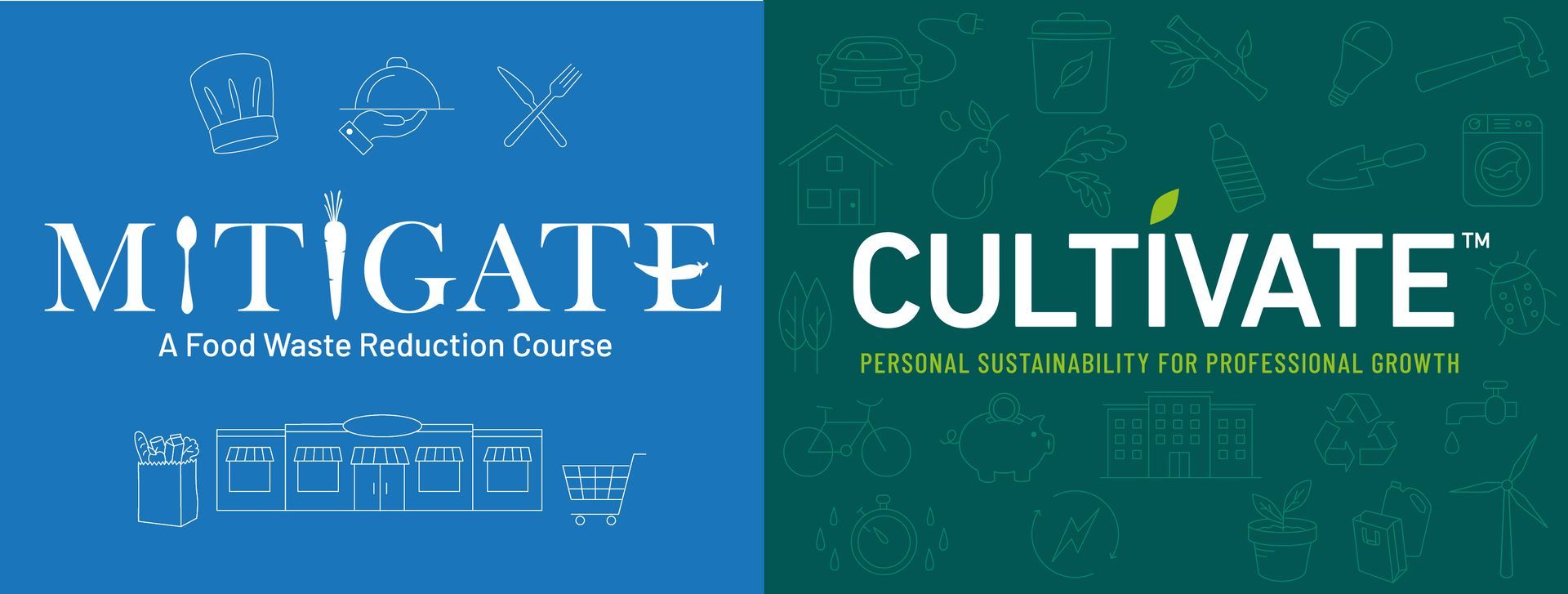
March 23, 2026 I spend a lot of time thinking about how we teach sustainability. Not just the what , but the how and why . At TripleWin Advisory , a woman-founded, -owned, and -led sustainability consultancy and registered public benefit company, we believe real progress on circularity requires more than good intentions. It requires practitioners who are genuinely equipped to act. That conviction is what led us to develop two courses now available through ISSP: Cultivate and Mitigate . Both courses have since been adopted by universities and are reaching sustainability students across the country. Knowing what went into building them makes me want to share the story behind each one. Mitigate: Built From Practice, Not Textbooks Mitigate was created from hands-on work with partners tackling one of the most pressing issues in sustainability: food waste. Reducing food waste is consistently ranked among the highest-impact solutions to climate change, and yet it remains one of the most underfunded and under-addressed areas in the field. TripleWin Advisory has worked with the World Wildlife Fund (WWF) and the Pacific Coast Food Waste Commitment (PCFWC) , a public-private partnership whose frameworks were ultimately adopted at the national level. Those assets, that research, and those hard-won insights form the backbone of Mitigate. When we talk about food waste reduction strategies in this course, we're drawing on frameworks that have been tested and refined in real supply chains and policy environments. For learners who want to do this work professionally, that grounding matters. The University of Wisconsin has integrated Mitigate into their undergraduate and graduate sustainability programs, which speaks to what the course offers academically: rigorous, applied content that bridges the classroom and the field.
More blog posts